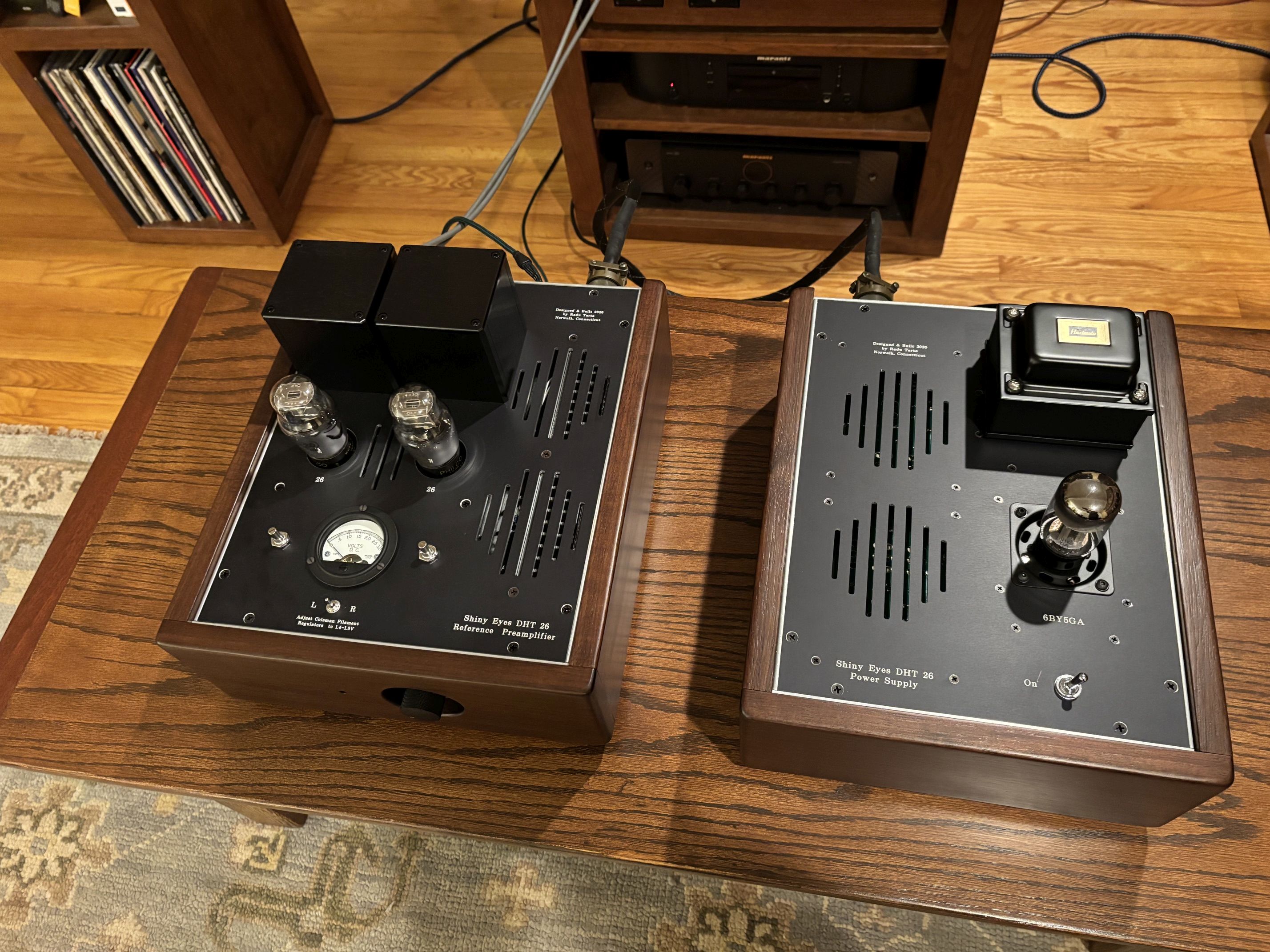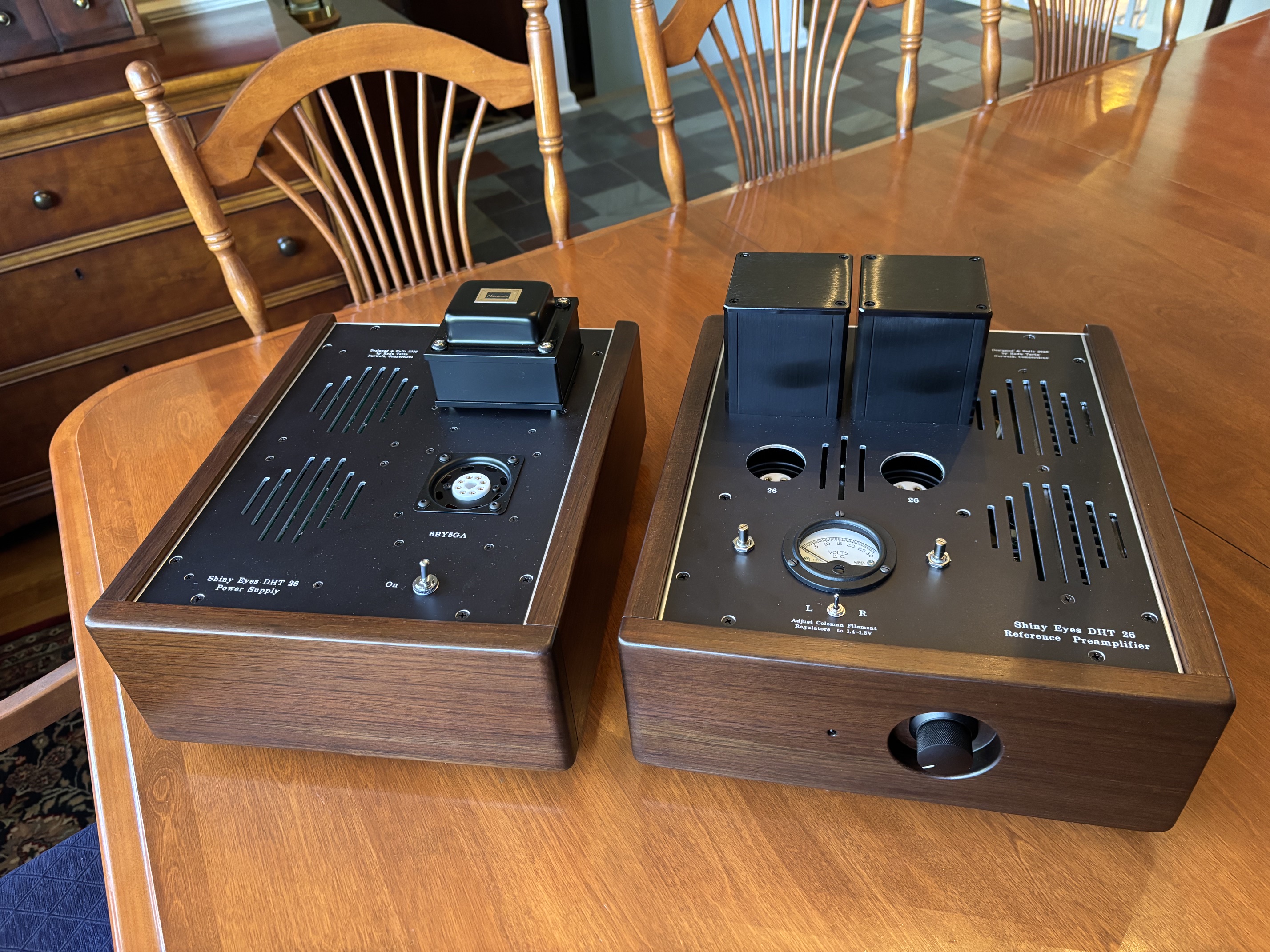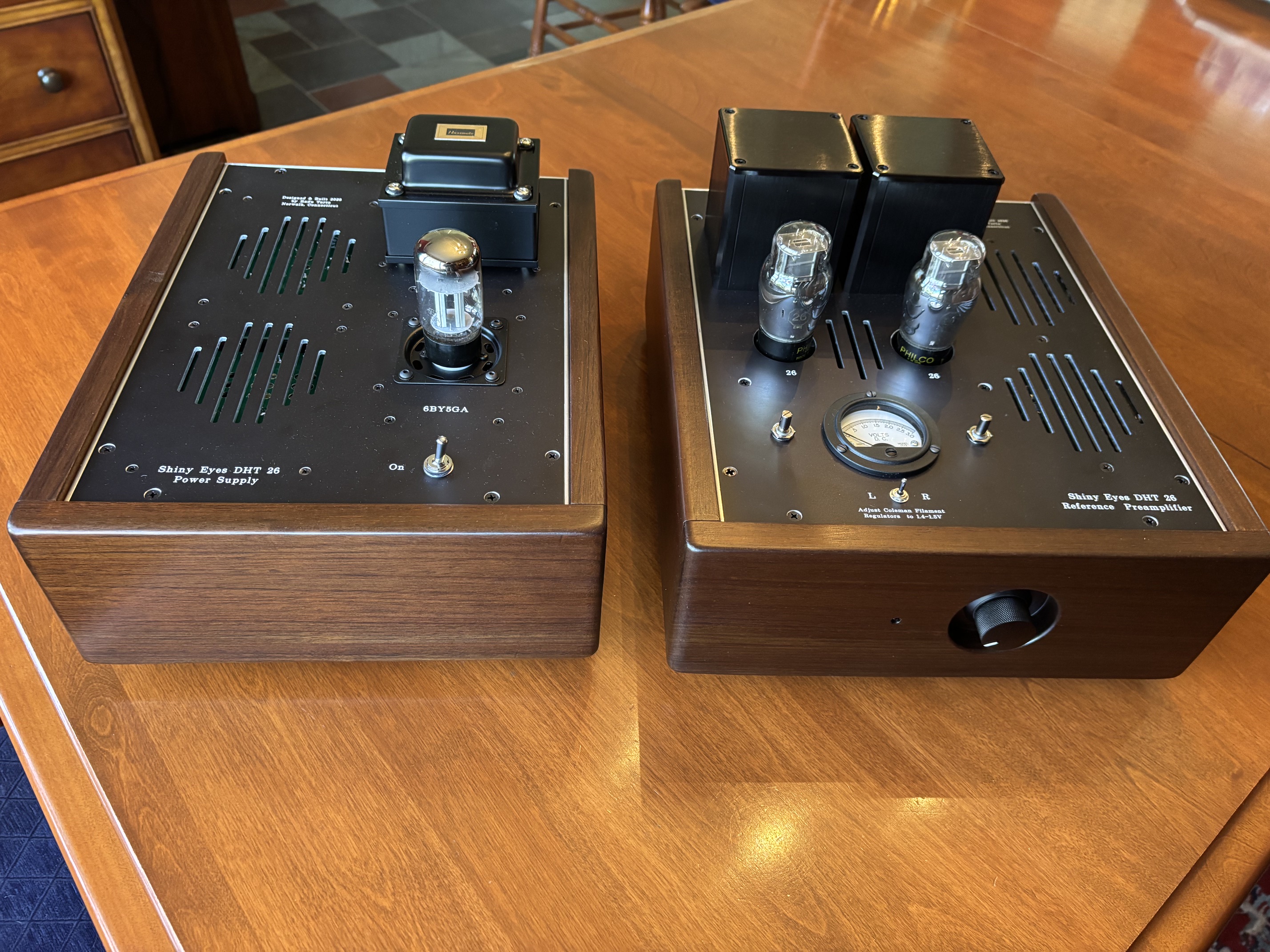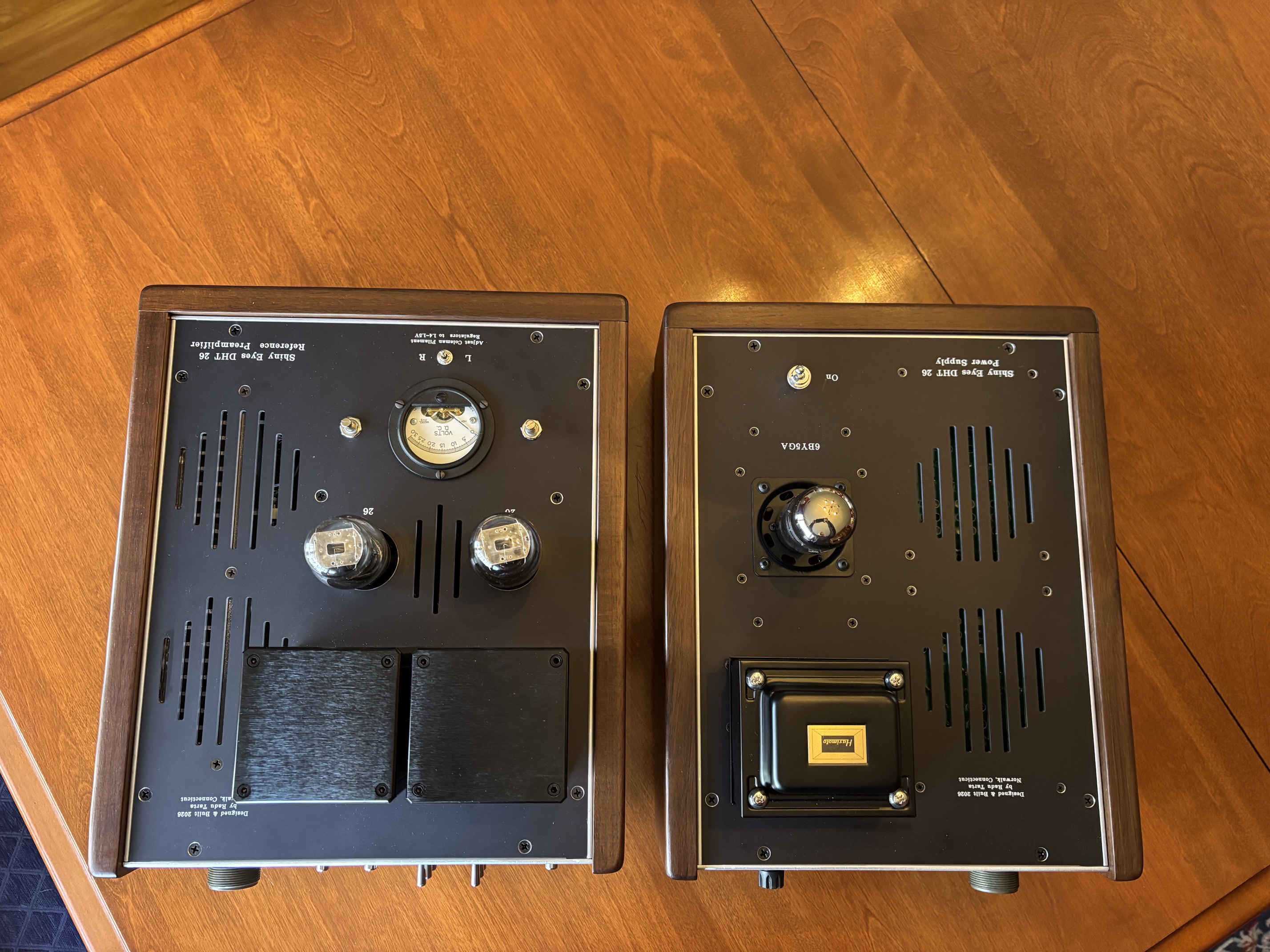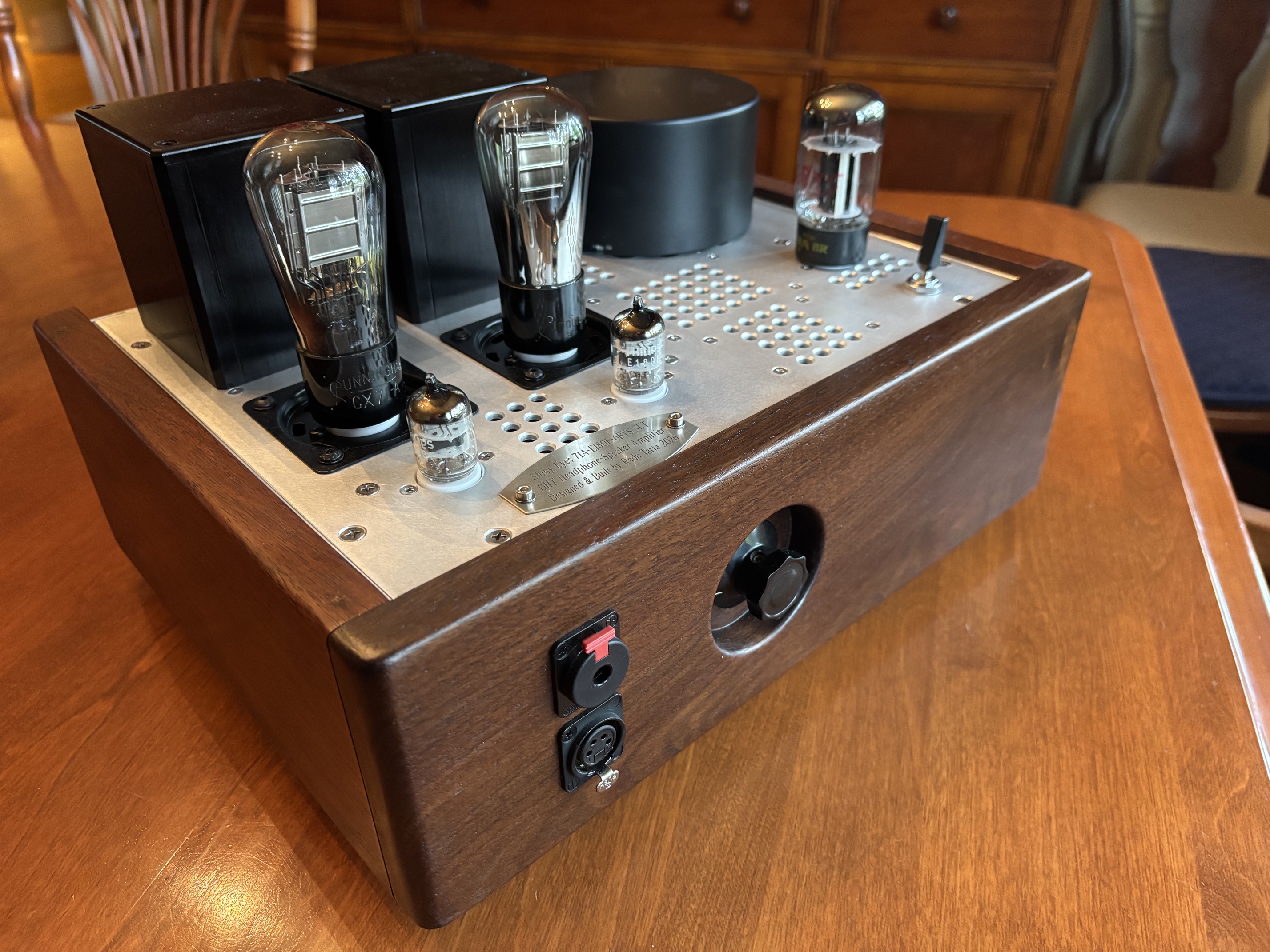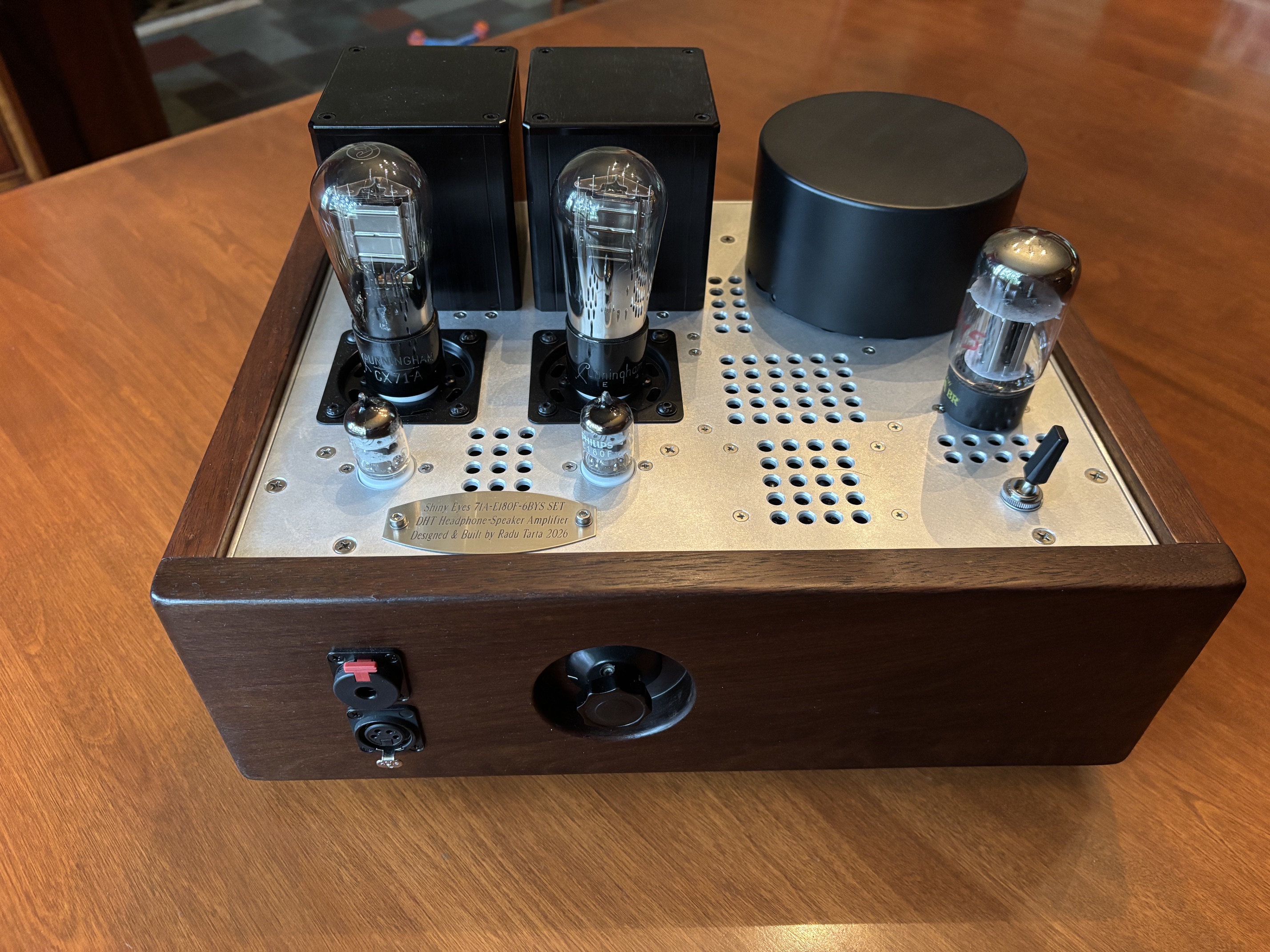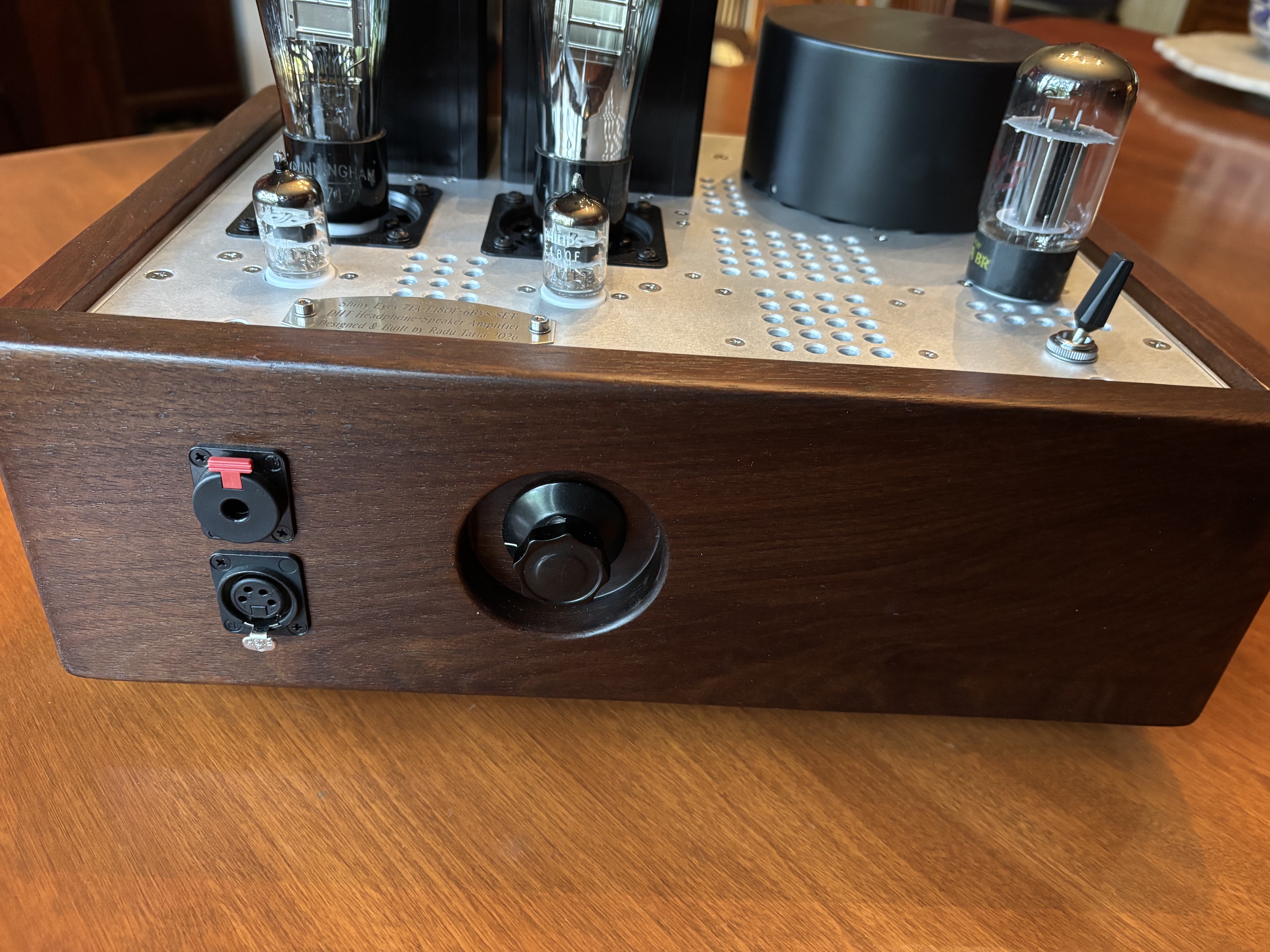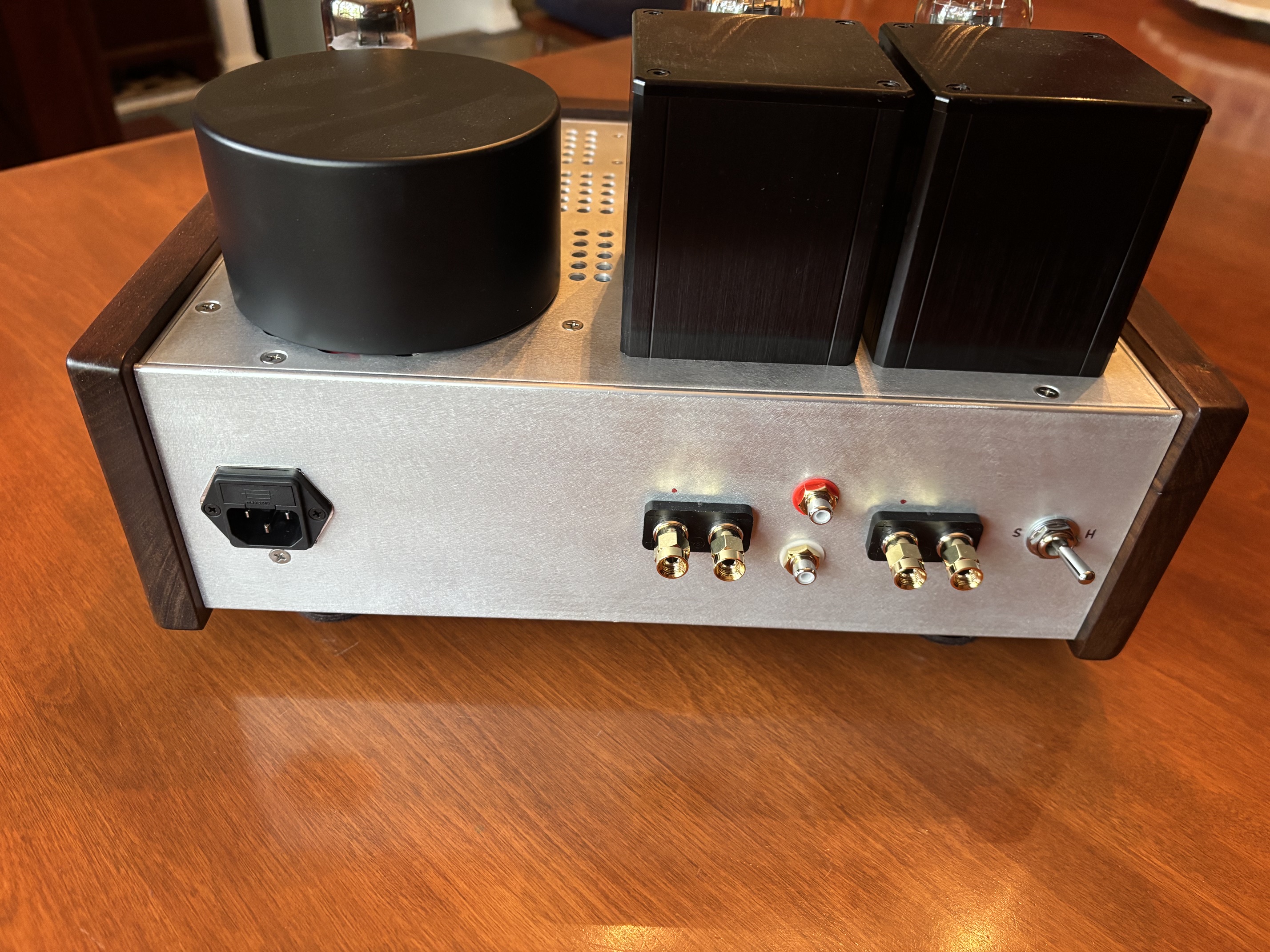
This is a truly one-of-a-kind preamplifier built around the legendary Type 26 direct-heated triode (DHT), renowned for its exceptionally pure, natural, and transparent sound signature.
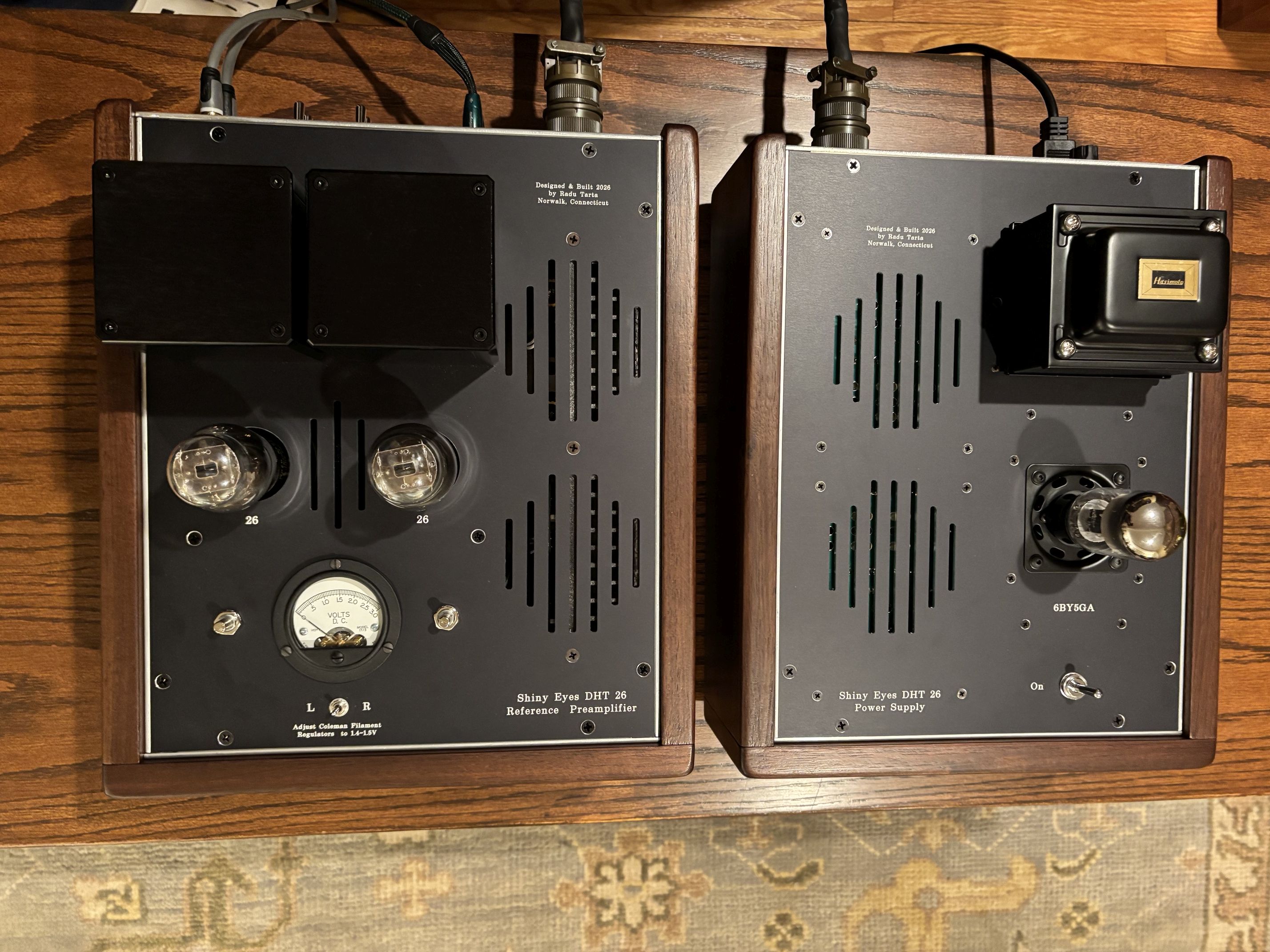
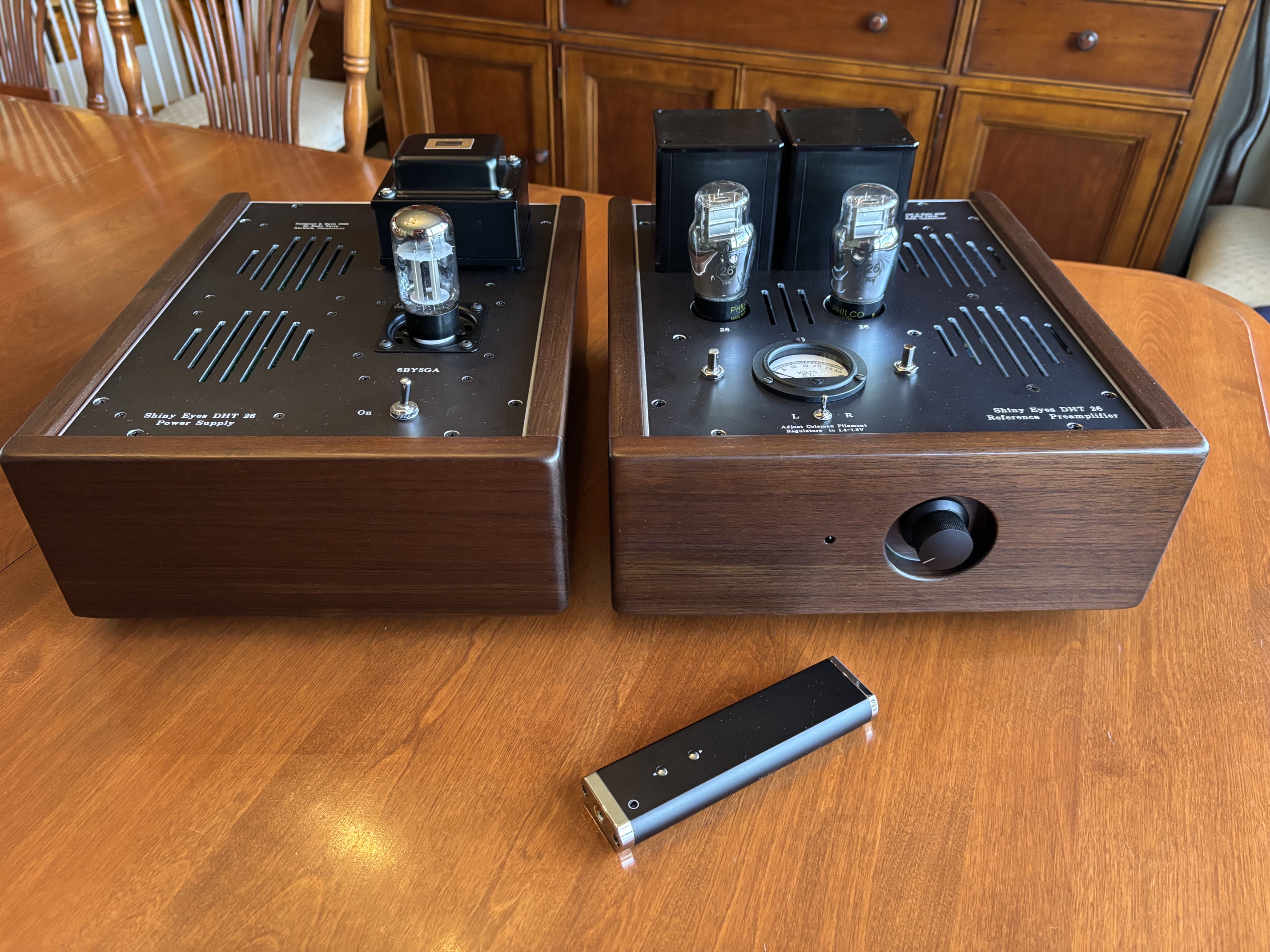
The design utilizes a fully separated dual-chassis architecture, with the power supply housed independently from the main preamplifier section. The custom screened umbilical cable carries DC only, minimizing noise and ensuring optimal isolation from AC radiation — a critical consideration when working with sensitive DHT tubes such as the Type 26.
Special attention was given to achieving ultra-low noise and minimal microphonics. Since Type 26 tubes are highly susceptible to hum and interference from nearby AC fields, the isolated power supply configuration significantly improves performance.
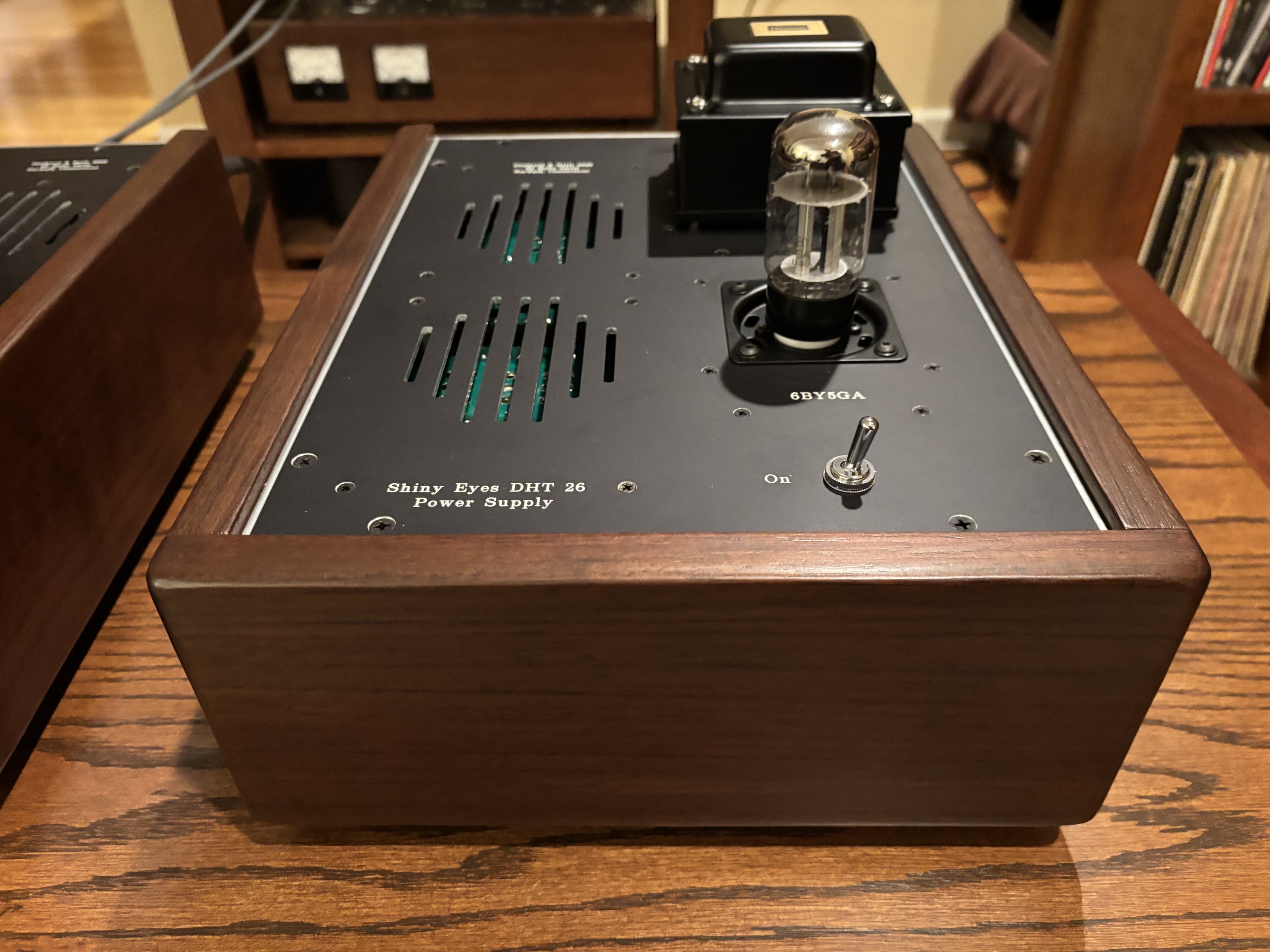
The power supply chassis contains:
• Independent filament supplies for each Type 26 tube
• Regulated DC supply for the remote-control circuitry
• Dedicated high-voltage supply section
Each filament supply employs 40,000uF of filtering capacitance alongside highly regarded Coleman filament regulators operating as constant current sources (CCS). High voltage rectification is handled by a 6BY5GA tube rectifier feeding a CLCLC filter network, followed by a MOSFET shunt regulator capable of reducing ripple to microvolt levels.
Protection circuitry includes:
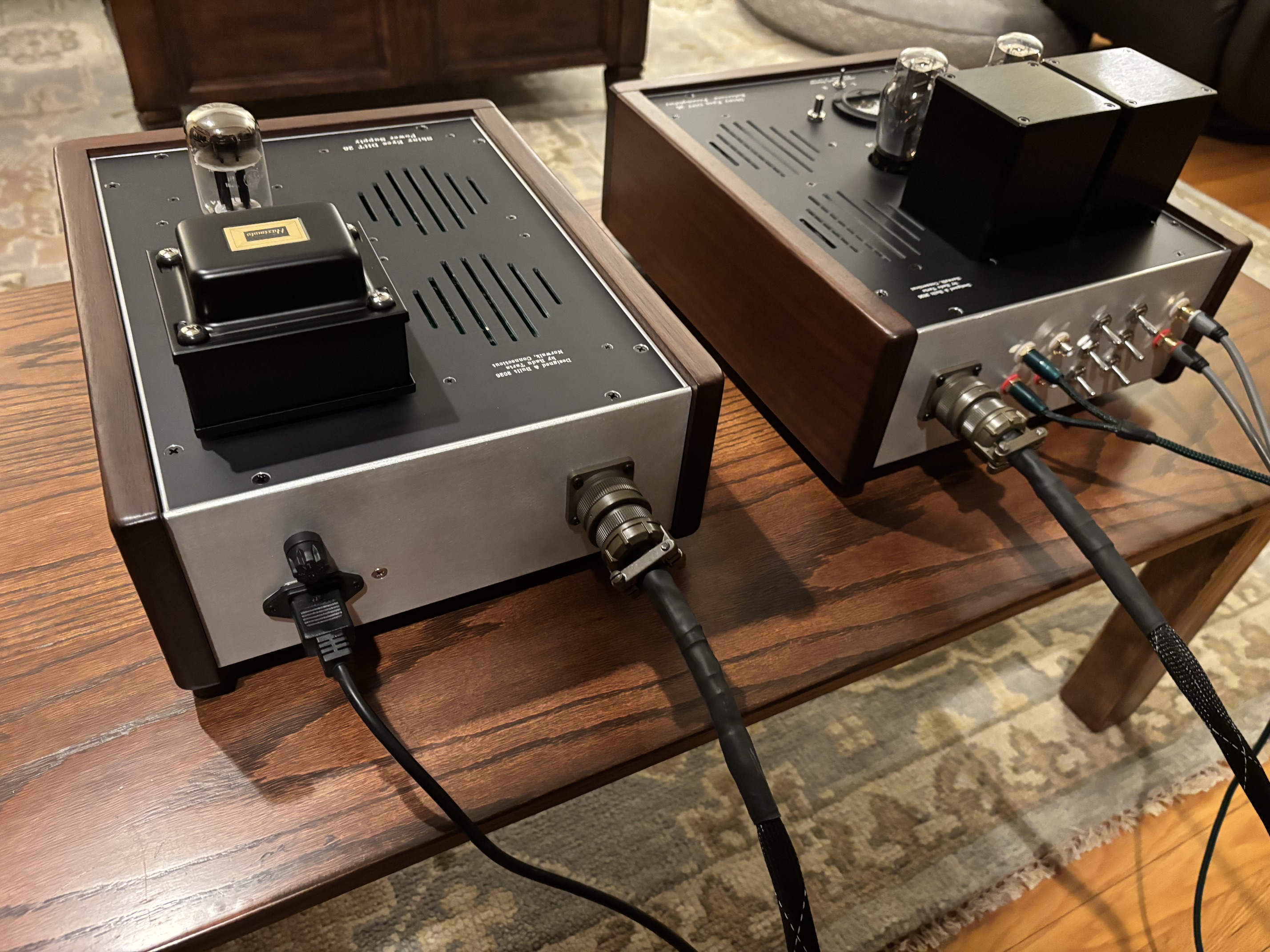
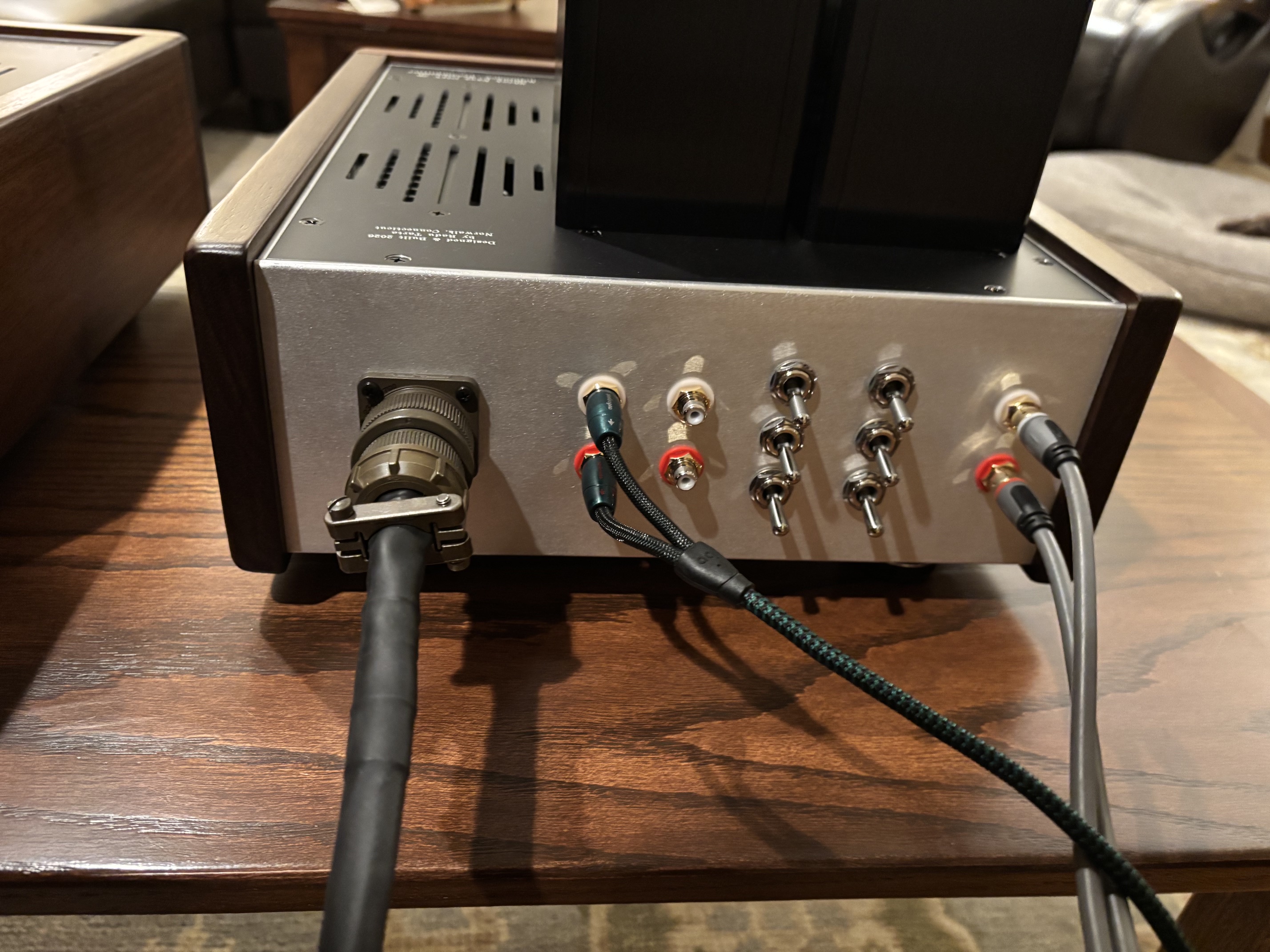
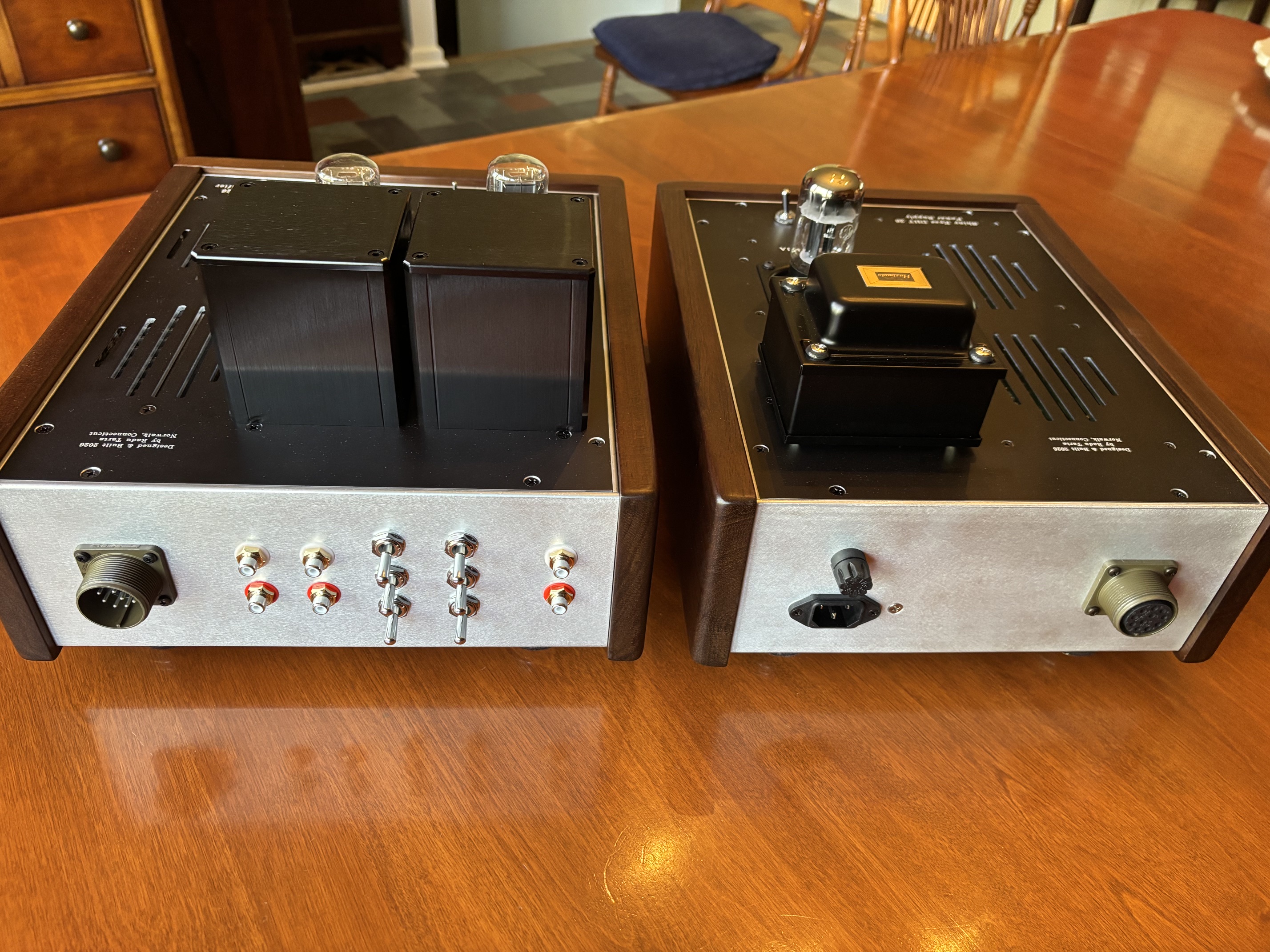
• One rear-panel 1.5A slow-blow main fuse
• Two independent 0.75A slow-blow filament supply fuses
The main power transformer is a premium Hashimoto unit equipped with an internal thermal fuse for enhanced safety. Because this fuse is non-replaceable, the use of a properly calibrated, high-quality 1.5–1.6A slow-blow fuse is essential to prevent irreversible transformer damage.
The power supply connects to the preamp chassis via a custom-built screened umbilical cable terminated with military-grade Amphenol connectors. Each connector is uniquely matched to its enclosure to prevent incorrect connection and ensure operational safety.
The main preamp chassis incorporates:
• High-voltage shunt regulator
• Single-stage amplification circuit
• Remote-controlled volume control
The signal path is intentionally minimalist and completely free of coupling or decoupling capacitors. This was achieved through:
• Filament bias topology using a low-value 10-ohm resistor without bypass capacitors
• Lundahl LL2763NC nanocrystalline output transformers
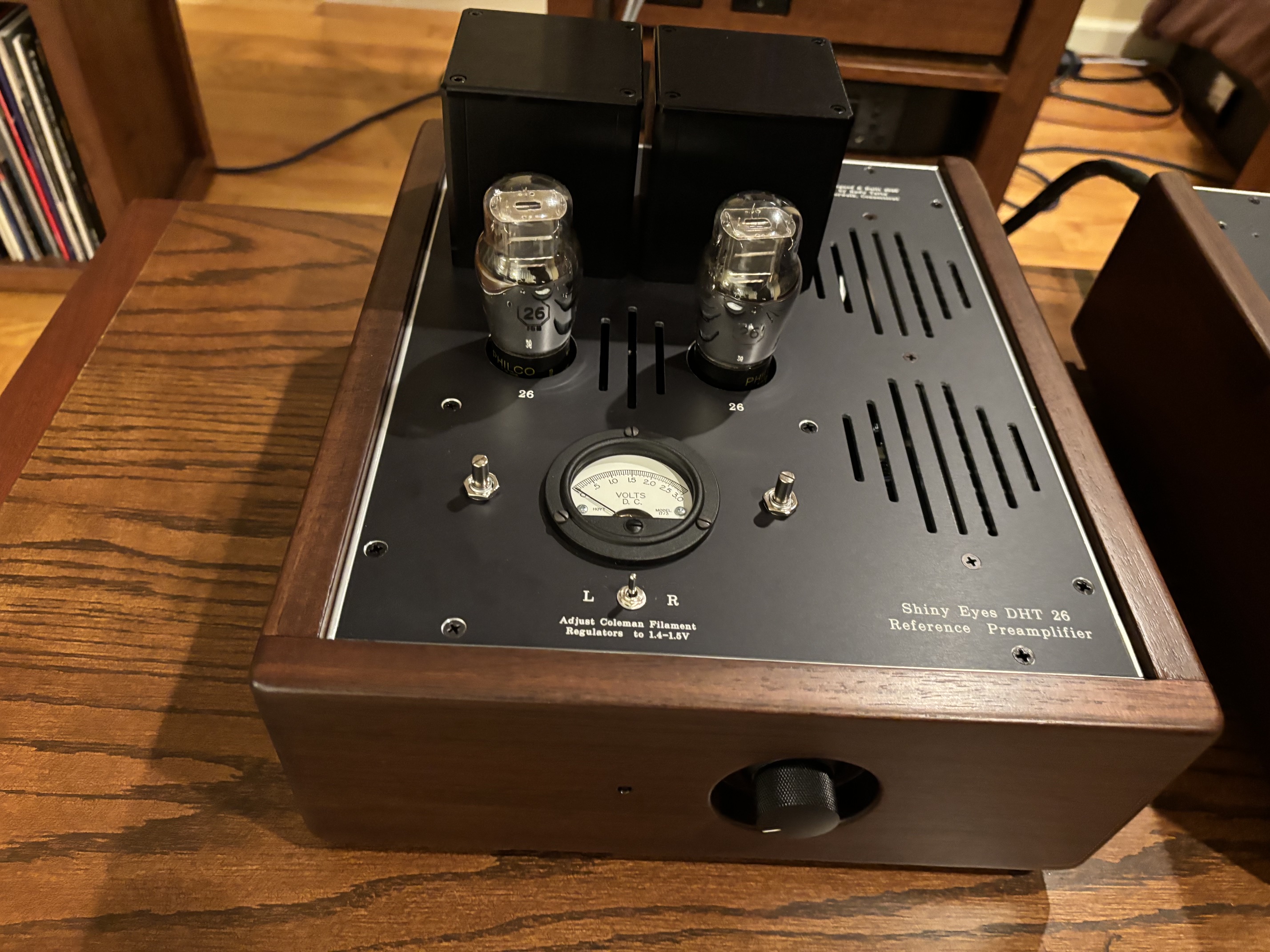
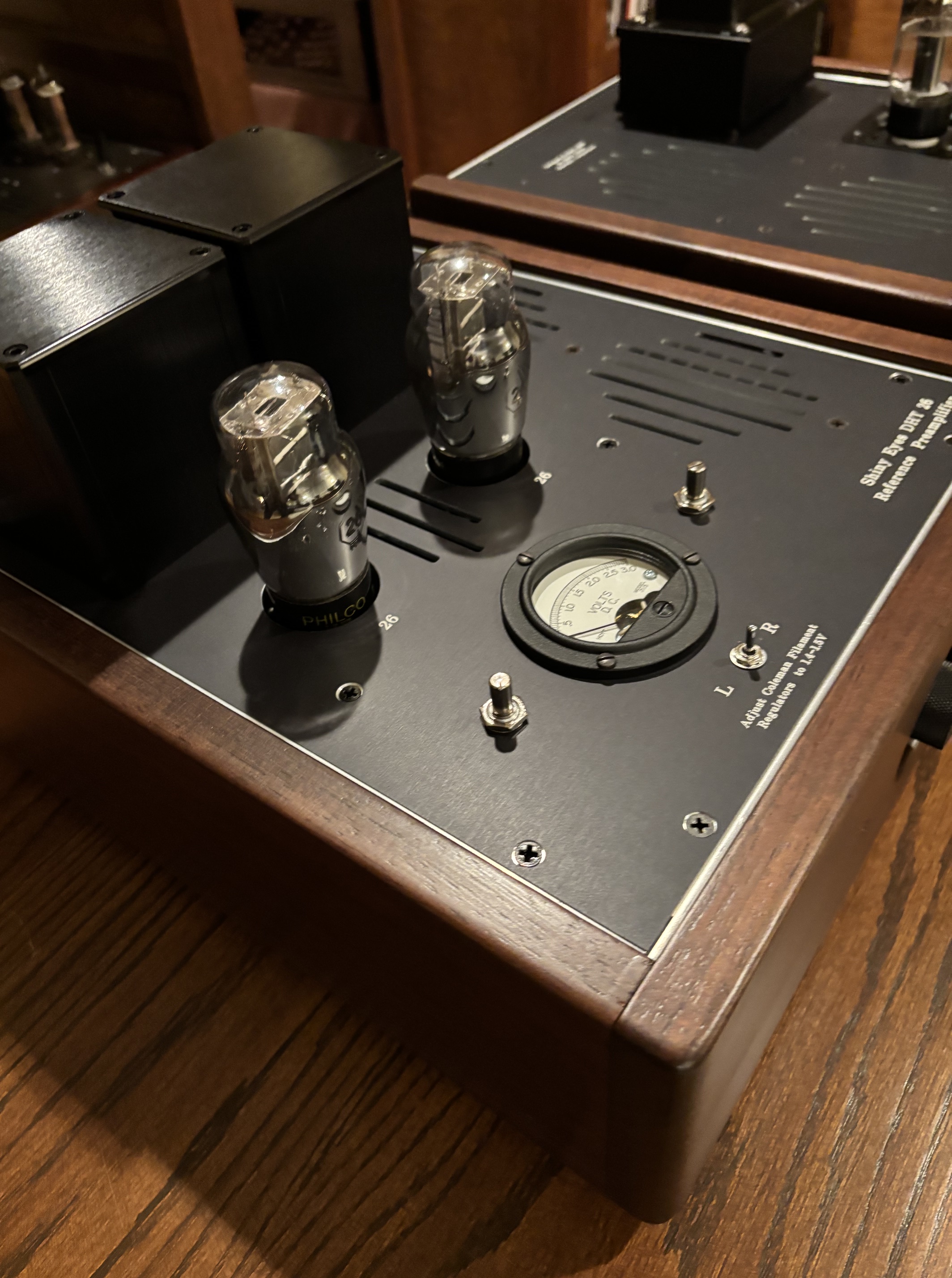
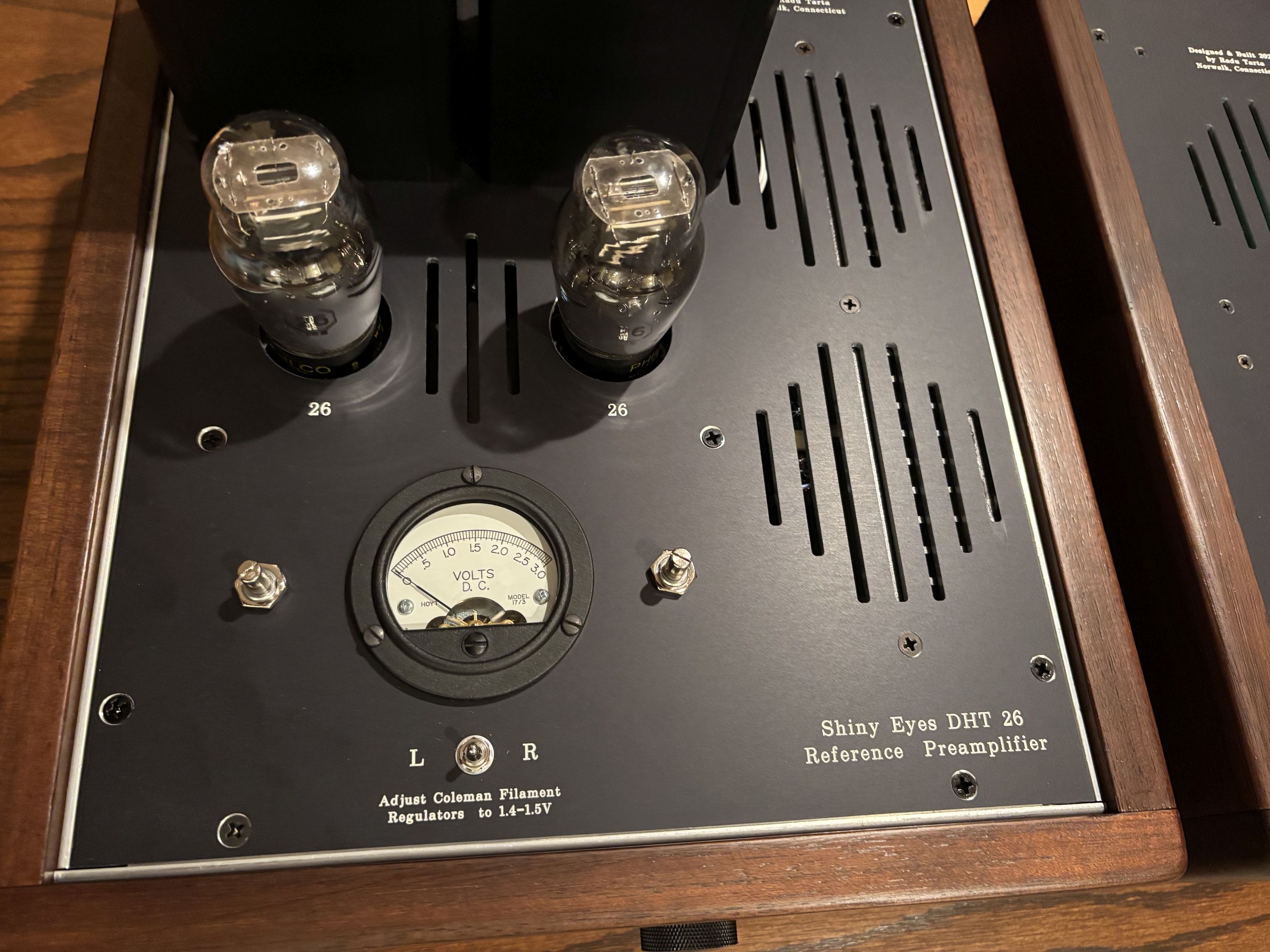
A Hoyt USA analog panel meter monitors filament voltage for each channel via a left-center-right toggle switch:
• Left: left channel measurement
• Center: meter disengaged
• Right: right channel measurement
Precision potentiometers on each side of the meter allow fine adjustment of filament voltage between 1.4V and 1.5V. Lower filament voltage reduces microphonics and may be adjusted down to approximately 1.2–1.3V depending on tube characteristics, while maintaining visible filament glow. A 1.4V setting generally provides the best balance between low microphonics and optimal output impedance.
The Lundahl output transformers feature four secondary windings with selectable gain configurations accessible via rear-panel switches:
• High gain: 12–13dB, 2:1 output ratio, 2400-ohm output impedance
• Low gain: 6–7dB, 4:1 output ratio, 600-ohm output impedance
To further reduce vibration sensitivity, the tube sockets are mounted on a floating sub-plate suspended by four neoprene damping standoffs. Tubes should be inserted and removed carefully to minimize mechanical stress.
Volume control is handled by a motorized TKD CP-2511 high-end potentiometer paired with a Bent Audio remote-control system known for exceptionally quiet operation.
Additional features:
• 1 input / 2 outputs
• Heavy-duty 1/8” aluminum chassis by Landfall Systems
• Custom CNC-machined and anodized top plate by Front Panel Express
• Hand-finished ¾” Peruvian walnut exterior with General Finishes Antique Oil urethane
Performance Specifications:
• THD: 0.02% (predominantly second harmonic) at 2Vrms output
• Frequency response: 30Hz–30kHz ±0.5dB (-1dB at 20Hz)
• Output impedance: 600 ohms (low gain), 2400 ohms (high gain)
• Gain: 6–7dB (low), 12–13dB (high)
• Power consumption: 70W
• Main fuse: 1.5A slow-blow
Dimensions & Weight:
• Main chassis: 19 lbs — 12.5” x 15” x 9”
• Power supply chassis: 22 lbs — 11.5” x 15” x 9”
The result is a preamplifier with a smooth, clean, highly resolving, and remarkably natural presentation.